
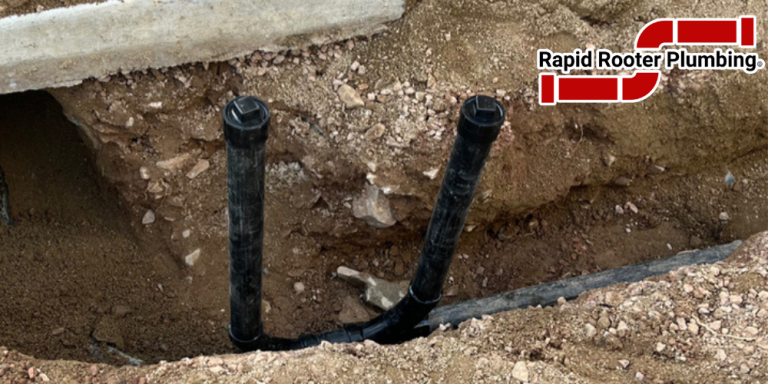
When homeowners think about plumbing problems, they usually think about pipes, fixtures, or appliances. But in Arizona, one of the biggest factors affecting your plumbing system isn’t inside your home, it’s underneath it.
Desert soil plays a major role in pipe damage, slab leaks, sewer failures, and shifting plumbing lines across Phoenix, Glendale, Peoria, Surprise, and the surrounding Valley.
Here’s what every Arizona homeowner should understand about how desert soil affects plumbing pipes, and what you can do about it.
Much of Arizona is built on expansive clay soil, which reacts to moisture levels. When the soil gets wet, it expands. When it dries out, it contracts.
Even small seasonal moisture changes can cause:
Foundation shifting
Stress on underground water lines
Cracked sewer pipes
Offset pipe joints
Slab leaks
Unlike areas with steady rainfall, Arizona soil swings between very dry and very saturated conditions, especially during monsoon season.
Over time, this movement puts constant pressure on buried plumbing.
Many parts of the Valley contain caliche, a dense, cement-like soil layer made of calcium carbonate.
Caliche can:
Restrict natural soil drainage
Create uneven pressure on pipes
Increase stress at pipe joints
Make underground repairs more difficult
When pipes are installed through caliche-heavy soil, any settling or ground shift can cause joint separation or cracking.
During long dry spells, desert soil shrinks and pulls away from underground pipes. This creates small air gaps around plumbing lines.
When moisture returns (monsoons, irrigation leaks, etc.), soil rapidly expands again, putting pressure back onto the pipe.
This cycle of shrink-and-swell creates long-term wear on:
Copper water lines
ABS sewer pipes
Clay pipes
Cast iron systems
Eventually, the stress can cause pinhole leaks, fractures, or full collapses.
In Arizona’s dry environment, tree roots aggressively seek water sources. Sewer lines and underground water pipes are prime targets.
Roots are drawn to:
Small cracks in older pipes
Loose fittings
Moist soil around sewer lines
Warm water from underground plumbing
Once roots enter a pipe, they expand quickly, often forming dense root masses that block sewer lines and crack pipes further.
Arizona soil contains minerals and varying pH levels that can contribute to pipe corrosion, especially for older copper or galvanized systems.
Soil conditions can accelerate:
External pipe corrosion
Pinhole leaks
Joint deterioration
Premature pipe failure
Homes built before the mid-1990s are particularly vulnerable.
Most Arizona homes are built on slab foundations. That means your water lines are often embedded in or running beneath the concrete.
When soil shifts under the slab, pipes can:
Rub against concrete
Develop stress fractures
Experience pressure points
Crack beneath the foundation
This is one of the primary causes of slab leaks in the Valley.
Because these problems start underground, warning signs can be subtle at first:
Sudden drop in water pressure
Warm spots on floors
Unexplained increases in water bills
Cracks in walls or flooring
Recurring sewer backups
Soggy patches in the yard
Gurgling drains
If you notice any of these, soil movement may be part of the issue.
While you can’t change the soil, you can reduce risk:
Schedule routine plumbing inspections
Address small leaks quickly
Keep irrigation systems properly maintained
Avoid overwatering near the foundation
Install root barriers when planting trees
Consider full repiping if your system is aging
Early detection is far less expensive than emergency slab leak repair or sewer replacement.
At Rapid Rooter Plumbing, we understand how Arizona’s desert conditions impact plumbing systems. We use advanced diagnostic tools to identify soil-related plumbing problems, including:
Acoustic leak detection
Thermal imaging
Pressure testing
Sewer camera inspections
Slab leak evaluation
Our goal is to identify the root cause, not just patch the symptom.
Soil-related plumbing issues develop over time. Our membership program helps catch them early with:
Priority Scheduling – Skip the wait during busy summer months.
Annual Multi-Point Plumbing Inspection – Spot leaks before they drive up your bill.
Bi-Annual Drain Cleaning & Inspection – Maintain smooth flow during high-use seasons.
Semi-Annual Water Heater Flush – Keep your system running efficiently.
Exclusive Discounts – 10% off all repairs, and up to $300 off major installs.
24/7 Emergency Service – No extra charge for nights, weekends, or holidays.
Satisfaction-Backed Service Guarantee – Confidence in every job.
Transferable Coverage – Moving within our service area? Your membership moves with you.
No Hidden Fees – Clear pricing, every time.
Arizona’s desert soil may be out of sight, but it shouldn’t be out of mind. Expansive clay, caliche, dry conditions, and aggressive roots all play a role in underground pipe damage.
Understanding how soil affects your plumbing system can help you act early, avoid costly repairs, and protect your home’s foundation.
If you’ve noticed warning signs or want peace of mind, schedule an inspection with Rapid Rooter Plumbing today.
📞 Call/Text: (623) 581-0346
🌐 Visit: RapidRooterAZ.com
📍 Serving Phoenix, Peoria, Glendale, Surprise, Scottsdale & the West Valley